Targuman Rotating Header Image

Lamentations

New translation of Targum Lamentations

Solger MS of TgLam 1:9b-1:16a

This is mostly a post to test the integration of my blog with twitter, but a separate post doesn’t hurt to emphasize that, at long last, I have updated/corrected my translation of TgLam. This translation is based upon Codex Vaticanus Urbinas Hebr. 1 (the images from the older but incomplete Solger MS can be found here as well). So you can find my updated translation on this site and on the NTCS site.


Lamb-entations: “You can believe in God and still miss Him.”

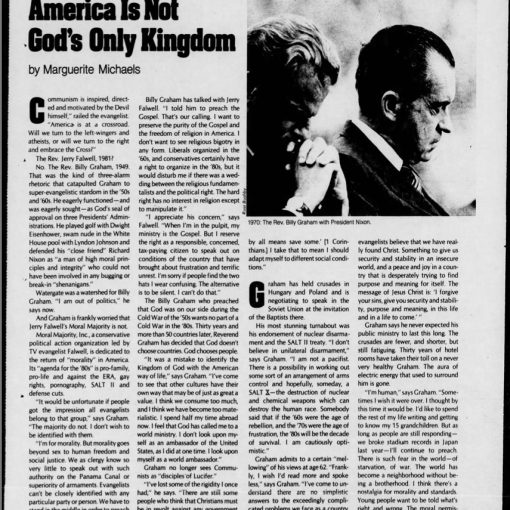
That title was not mine, but that of the print version of Carla Carlisle’s “Spectator” column in Country Life magazine from last Lent. (Thanks to Philip Jenkins for sending me a copy last week.) Carlisle is not only a columnist, but also a farmer (near as I can tell) in England who raises sheep. Last year she reflected on the fact that her father used to read all of the book of Lamentations every Lent, because he “believed it was spiritually lazy not to concentrate in the run up to the most momentous event in the Christian calendar.” She admits to never having finished the book (now that is lazy, spiritually and otherwise!) but offers some thoughtful musings nonetheless. Last year, you will remember, was the 5th anniversary of the war in Iraq.

Between the beginning and ending of these broadcast laments, lambs were born. Lambs arriving during Holy Week have a Biblical poignance. The Old Testament is full of shepherds looking for new pastures. The Gospel for the Sunday after Easter begins ‘Jesus said, I am the good shepherd’. All week long, our pastures were transformed into windswept tundras, with howling winds and bitter rain, hail and snow. Each morning, I tried to scoot the newborns and their mamas into the shed. Without a sheepdog, this is a job that requires picking up the lambs and encouraging their mothers to follow. There are no sheepdogs in the Bible either, an oversight that Jesus may have lamented during the parable of the lost sheep. Once inside the shed, I settle down, a lamb tucked inside my jacket, and my radio tuned into Book of the Week. The choice for Holy Week was Julian Barnes’ Nothing To Be Afraid Of, a meditation on mortality and the fear of death. He begins: ‘I don’t believe in God, but I miss Him.’

By the time Easter Sunday arrived, the snow had descended like a veil over the countryside, a climatic version of the cloud in Lamentations, created so ‘that our prayers should not pass through’. Modern theologians claim that Lamentations is not a breast-beating, self-pitying lament, but an account of a disaster that, without offering easy grace or cheap hope, tells us how to handle grief. It’s a useful interpretation when there is much to grieve about. The cries of the bewildered ewes as we take away the lambs that didn’t survive the freezing night. The milestone of ‘4,000 American soldiers dead’ reached by Evensong on Easter Sunday. Tibetan monks dying for freedom. Houses repossessed. I could go on.

But I’m trying not to dwell on the ‘grandeur of sadness’, but to marvel at what has lived. Daffodils that survived the snow. Lambs that have begun their lamb games and the bereaved ewe that has adopted a hungry triplet. The hope that someday even this war will end. And here’s the Lamentation for the Day: you can believe in God and still miss Him.


Lamentations Bible Brief now available

My short introduction to Lamentations for the Bible Briefs series is now available in a lovely pdf. Free download here.
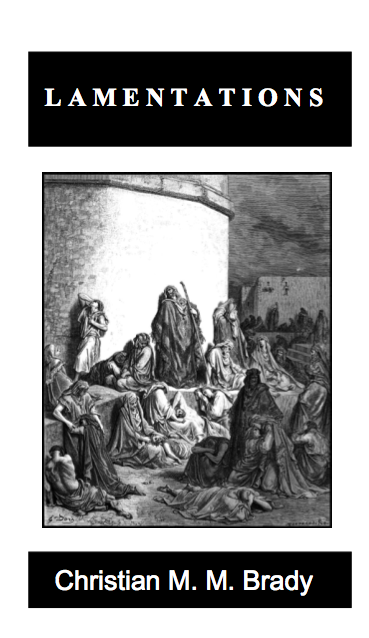
Bible Brief: Lamentations


The freedom to lament

I began writing this as a reply to John’s comment on my introduction to Lamentations, but I think I would like to move the discussion up to the level of a post. In so doing I hope that some of you who have counseled those in grief or gone through your own grieving and struggling will be willing to share how it is you (and perhaps have not) been able to be honest with God.

John’s comment:

We studied Lamentations on five consecutive Wednesday nights a while back. A passage I find especially moving is 1.12 – ‘any sorrow like my sorrow.’ I have used it at funerals to comfort a grieving family who may feel that no one else can possibly understand their personal grief.http://farm4.static.flickr.com/3006/2364199029_52be2cbb17.jpg?v=0

There are a number of such passages in Lamentations and I am glad to know that you are able to provide comfort through the words. This is part of the reason I still work on Lamentations, because I believe we have largely lost the ability and understanding of lamenting in western Christianity. It is important that people know that it is ok to grieve, to cry out, and even to be angry with God. He is a big God and he can take it. Most of all, I believe God wants us to be honest with him, to completely open up our hearts and minds, no holding back; open up the fire hose and let it flow, fierce and angry.

John’s reference to funerals reminds me of what I consider to be one of the most poignant passages in all of Scripture. Every time I teach 2 Samuel and I come to the Bathsheba episode I always pause and comment about David’s response to their son’s death. The scene is incredibly powerful. David has accepted his guilt and asked for God’s forgiveness for his sins of taking Bathsheba and killing Uriah. But Nathan declares that the son shall die. David mourned for the child, even as he was still alive, David lay by his bed and fasted. The child died.

2Sam. 12.20   Then David rose from the ground, washed, anointed himself, and changed his clothes. He went into the house of the LORD, and worshiped; he then went to his own house; and when he asked, they set food before him and he ate.  21 Then his servants said to him, “What is this thing that you have done? You fasted and wept for the child while it was alive; but when the child died, you rose and ate food.”  22 He said, “While the child was still alive, I fasted and wept; for I said, ‘Who knows? The LORD may be gracious to me, and the child may live.’  23 But now he is dead; why should I fast? Can I bring him back again? I shall go to him, but he will not return to me.”

As a parent, how can one read this and not be overcome with emotion? There are deep and penetrating truths in the episode. While we live, and while those around us live, we must pray to God to save. He is a gracious God who saves. Eventually, however, that time will arrive and in our grieving for our loss we may be assured that we will go to them. In this world we must break our fast, as hard as it may be, and it may be some time before we are able, but we must break our fast and continue to live and love in this world.

So far I have not officiated at a funeral. I have no idea what I would actually say in such a circumstance. I have of course been to several, but usually as a member of the grieving family. But I will keep these words and therefore I will have hope…


Bible Brief: Lamentations

It has not yet been put into final pdf format and when it does I will post a link, but I (finally) finished the Lamentations volume for the small pamphlets in the Bible Briefs series that Stephen Cook is editing! Since I think Lamentations is a rather good book for studying during Lent I thought I would go ahead and post my intro here. The audience for this series is Christian laity so don’t look for footnotes or heavy linguistic analysis. On the other hand, it was quite a different experience to write for this audience and I think it is will be reasonably useful as a devotional piece. I hope you enjoy it and can make use of it, for yourself or perhaps your community. (Once the pdf is ready I will direct folks there so that VTS and Forward Publishing will know how many downloads they have.)

Lamentations

The book of Lamentations is one of the smallest works in the Bible and yet one of the most powerful and enigmatic. Written in the aftermath of the destruction of Jerusalem and its temple in 586 B.C.E. by the Babylonians, Lamentations expresses the grief and disbelief of those who lived through the horror and yet still looked to their God. Not just an outpouring of emotion, however, the book of Lamentations also contains a profound theological reflection and response to the problem of sin and suffering.

This incredibly thoughtful and thought-provoking work is often overlooked in Christian study and is rarely read in the lectionary cycles, either in the Episcopal Book of Common Prayer or the Revised Common Lectionary. Perhaps the passage best known to Christians comes from Lamentations 3, which is an optional reading for Holy Saturday and is the basis of a famous hymn:

The steadfast love of the LORD never ceases,
his mercies never come to an end;
they are new every morning;
great is your faithfulness. (3:22-23)

While this passage is a statement of the poet’s firm faith in God’s presence and mercy, it does not serve well as a summary of Lamentations. The book’s final two verses are perhaps a better encapsulation of the tone and temperament of Lamentations:

Restore us to yourself, O LORD, that we may be restored;
renew our days as of old—
unless you have utterly rejected us,
and are angry with us beyond measure. (5:21-22)

(more…)