Targuman Rotating Header Image

Targum

What is “content creation”? The iPad is for content consumption AND creation.

REPOST from January. Tomorrow, November 7, 2011, I will be giving a presentation on using the iPad for content creation. Seems fitting to share this again.

For my colleagues in biblical and rabbinic literature please bear with me in this post or simply skip towards the end. I found that this discussion led me to consider what is “content creation” in terms of biblical commentary, interpretation, homiletics and the like.

DSC06675

An altered image. Content created?

Last month my brother (The Professor Notes) wrote a post based upon a discussion/debate that we had. The debate began with the question of whether or not the iPad is simply (and predominantly) a device for content consumption (reading, videos, games, etc.) or, as I have contended, it is also a very powerful content creation device. Steve wrote,

I mentioned that, and my brother challenged me, arguing that he, and his colleagues, are using the iPad quite regularly for note taking and email.  I had to agree, but then…. we learned. See, for me the operational definition of “content creation” is something that is substantive.  I have a definition that looks at the degree, or dare I say it, quantity, of the “content” being created.  I never viewed writing emails, taking notes, or editing existing slideshows as real “content creation.”  And I certainly don’t view arranging photographs into a slideshow as a “content creation” event.  The creation of the content in that case was during the translation from the photographer’s eye to the sensor in the camera.

He goes on from there to discuss “Operational Definitions” and applied it to his field, that of business and business logistics. He concludes,

So then, we are now faced with the question, how do we define “Content creation”? Is it simply “creating a document of some sort and any size, so that something that did not exist, now does?” Or does it require a greater degree of creativity and involvement in the process?

While I am late to the discussion it intrigues me for a number of reasons, not least because I repeatedly reinforce (redundantly) to my students the importance of defining their terms. But let me first address my brother’s comments above, starting with “for me the operational definition of “content creation” is something that is substantive.” Defining “substantive” might be necessary here as well, since you can see all the items that my brother does not consider “content creation.” Most of those I would argue are indeed, or at least can be the creation of content. I would like to start first with his suggestion that in photography, “The creation of the content in that case was during the translation from the photographer’s eye to the sensor in the camera.” I would suggest that most photographers would argue that the taking of the photograph is merely the beginning of the content creation process. Occasionally yes, a photographer may have gotten it absolutely “right” in that first shot. But even then if they are to share that image they have to develop the film and enlarge/digitally manipulate and print the image or edit it into a digital show of some kind. Most often photographers do all sorts of work to edit and manipulate their image, whether in a darkroom or on the computer, before they feel they have the final product that they would like. Not coincidentally, there are several fairly powerful apps for image editing available for the iPad. The point is, “content creation,” assuming we mean something other than merely “creating a document of some sort and any size, so that something that did not exist, now does,” (which I believe my brother implied is  his view) is not simply the act of the photographer snapping the shot, but rather involved the manipulation of the data generated in that shot. (more…)


Targum Studies: The Exegetical Method

Solger MS of TgLam

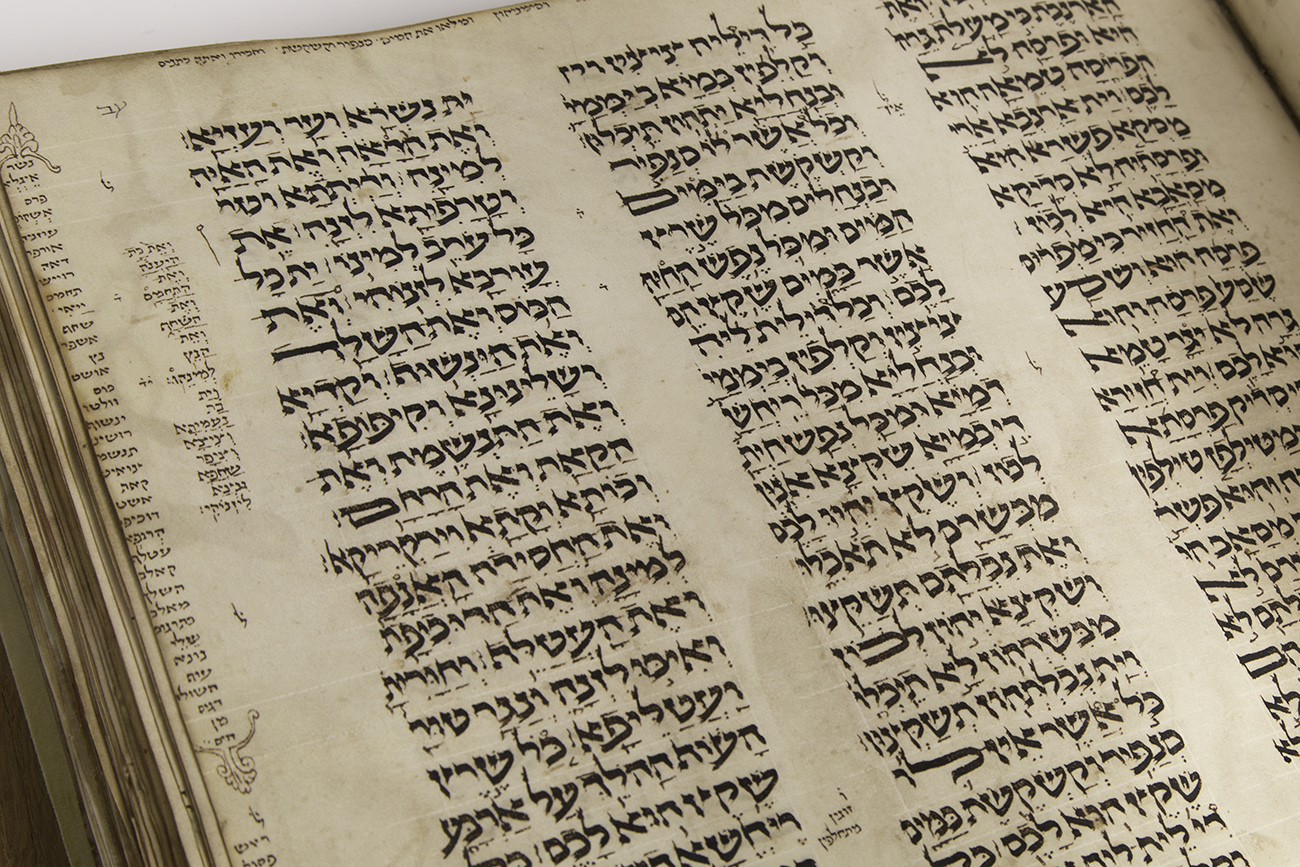
TgLam 3:18, Solger MS

As I am working on my new book on Targum Ruth I am also editing my doctoral thesis to get it into eBook form (well, truth be told, an undergrad is doing the editing). One matter that I laid out in the thesis and my book that I think is still valuable is the need for us as scholars to be explicit in our methods. Or at least to be as conscious of them as we can be. In the following I lay out my argument for what I call “the Exegetical Method” for analyzing Targumic Literature. I was working on Targum Lamentations at the time so the examples all come from that text. For citations (there were far too many footnotes to sort out and, as I have suggested before, I hate endnotes) please see the PDF of my thesis available here.

The Exegetical Method

Although targumic literature has been studied extensively over the last several decades, there has yet to be a systematic presentation of a critical methodology for the reading and interpretation of targumic texts. There are critical studies of the targumim, but they have tended to focus upon textual and recensional issues and relied upon relatively self-evident methods of analysis. Several scholars have focused upon the literary and theological aspects of the targumim, but they tend to articulate the method with which they will approach the particular text at hand rather than argue for a more general method that would be usable in the study of other targumim. On the other hand, there is the invaluable work of Klein, who examines many different targumim in order to reveal patterns in the translational method of the targumist.

It would appear that the field of targumic studies is lacking what biblical studies has taken for granted for the last 100 years: an armory of articulated critical methodologies from which we might choose that which best applies to a given text and approach. In this section I will present a general critical methodology that can be applied to targumic texts in order to determine their exegetical, or theological, perspective. This proposed method for discerning the exegetical perspective of a targum, which I will refer to as the “Exegetical Method,” involves three main steps.  (more…)


The Comprehensive Aramaic Lexicon is Up, (sort of) Really!

UPDATE: CAL is back up now, including our favorite, Targum Ruth! (Thanks Ed!)

CORRECTION: Sorry. I meant to specify Targum Ketuvim as not working yet. Ed Cook immediately wrote me to say that Targum is working for him. It is true that TgOnk and TgJon are working. PsJon does not appear to be up either…

Steve Caruso of The Aramaic Blog reports that The Comprehensive Aramaic Lexicon is Up. Except the Targum Ketuvim modules (and others?) are not. That is ok, as CAL points out, this is a labor of love so I am just very grateful that they have gotten so much done already. The story itself is worth posting here also:

A Note to our users: We apologize for the unavailability of our system during the six weeks between early May and mid-June, 2011. The CAL server was struck by a hacker from an ISP in London, UK precisely on the day that Dr. Kaufman left the country, apparently simply because he or she wanted a complete copy of our online version of Sokoloff’s DJPA and wanted to save the $100 for the second edition and received instead an early draft of the first edition, while totally comprimising the system. There is no indication that the identity of any of our users was looked for or their own privacy comprised in any way. The length of the delay is a direct function of the fact that we have failed to have any NEH funding renewed for many years now and the CAL continues on solely as a labor of love without any paid researchers.

This may not be “total” depravity, but it is pretty pathetic. I agree with Steve, when we find out who did this, it may not be pleasant.


New Translation of Targum Ruth Available (here!)

Targum Ruth 2:4, Solger MS

I am very (very) pleased to post my translation of Targum Ruth. It can be found here and the opening comments and first verse are below. This is a first draft and the English needs smoothing, but I thought I would do a bit of “crowd sourcing.” Feel free to read it and comment. Short of access to Beattie’s edition (see below) if you have the Accordance Targum module 1 then you have the base text or, once it is back online, you may view the Aramaic of TgRuth at CAL.

-=-=-=-=-=-=-=-=-=-=-=-=-=-=-

This is a translation of Derek Beattie’s critical edition, Targum and Scripture: Studies in Aramaic Translations and Interpretations in Memory of Ernest G. Clarke, SAIS 2, ed. Paul V.M. Flesher (Leiden: Brill, 2002), pp. 231-90. The base text is Sassoon 282 (S), which dates to 1182, the oldest MS available. I am grateful to Dr. Beattie for being will to allow his critical edition to be in my forthcoming book as an appendix.2

This is a first pass and does not contain various notes that will be present in the final version. In most cases where words are found in [] and are not italicized they are missing in the MS but are necessary to represent the Hebrew vorlage (MT). In some cases, particularly in TgRuth 1:1, there are words or phrases which are not in S (and are part of an aggadic expansion) but are necessarily for the expansion to make sense. If you have any corrections or comments (or corrections, remember, this is a first pass) please contact the me at cbrady@psu.edu.

The copyright is held by C. M. M. Brady. No use of this translation may be made without the author’s permission.


Chapter 1

1 When the judges led there was a [severe] famine in the land of Israel. Ten severe famines were decreed from Heaven to be in the world from the day of the creation of the world until the time when the King Messiah shall come, to reprove through them the inhabitants of the world. The first famine was in the days of Adam. The second famine was in the days of Lamech. The third famine was in the days of Abraham. The fourth famine was in the days of Isaac. The fifth famine was in the days of Jacob. The sixth famine was in the days of Boaz, who was called Ibzan (אבצן) the Righteous, who was from Bethlehem. The seventh famine was in the days of David, the King of Israel. The eighth famine was in the days of Elijah the prophet. The [ninth] famine was in the days of Elisha in Samaria. And the tenth famine will be [in the future], not a famine of eating bread nor a drought of drinking water, rather of hearing the word of prophecy from before the Lord. And when that famine was severe in the land of Israel a great man from Bethlehem of Judah went out and went to dwell in the field of Moab, he and his wife and his two sons.

Read all of Targum Ruth.

 
  1. This translation will be in the Accordance translation module in due time. []
  2. The images of a TgRuth MS on this site are of Codex Solger MS 1-7.2° (Solger) and should not be confused with the base text used in the translation which is Sassoon. The Sassoon MS is in private hands and I have only a photocopy of a facsimile available and do not have permission to post the images. []

Translation – Resistance is futile

I make no bones about it, I am no linguist. I do not derive great joy (and usually, no joy at all) from hours spent trying to decipher and understand grammar. Don’t get me wrong, I love it when I have developed language skills and believe it is vital to read any text to be studied in its original language. (And I am really not that bad.) But I don’t get the great and deep satisfaction out of the linguistic aspect of the whole enterprise. My interests are exegetical, which require keen knowledge of the language, but not grammatical and linguistic. Thus to translating any text, in my current case, Targum Ruth, is vital to a project of understanding an ancient exegete’s interpretations. So I was late last night pounding my head against TgRuth 3:12 (thank you James Tucker for diving into it with me via twitter!)

This morning I awoke to find my good friend John Hobbins, who is an excellent linguist, writing about Translation. My translation of TgRuth should be done later today. Look for it here!

Turning now to the languages of the Bible: the bulk of the Bible is written in a vernacular: ancient Hebrew. Never mind that standard biblical Hebrew in particular was also, quite probably, a lingua franca relative to spoken dialects of Hebrew, regional or otherwise, in the late First through Second Temple periods, in the land of Israel and (as time went on, very importantly) in the diasporas of the Assyrian, Babylonian, Persian, and Hellenistic periods. The point here: at the same time, and of utmost importance relative to the cultural confrontation of which ethnoi then and now are vehicles, standard biblical Hebrew was a vernacular.

Not just the content expressed in “classical” Hebrew, but the written language per se, form part of an anti-colonial project, in opposition to the culture and propaganda of which (the neo-Assyrian version of) “standard Babylonian” was the vehicle – assuming that (some of) the scribes who gave us the Bible were literate in that language and the “course” or curriculum to which it gave expression (the thesis of people like David Wright and Bernard M. Levinson); in opposition to (content expressed in) the more pervasive (and perhaps less insidious, though one should never forget Jeremiah 10:11, to be read in strict conjunction with Ps 82) the more widely used (and still often unknown, or poorly known) lingua franca of the Assyrian empire, Aramaic. These facts form part of the background of a comment like that found in Isaiah 36:11 and the style-switching that Gary Rendsburg has noted.1 On “the invention of Hebrew,” on Hebrew as a vernacular and vehicle for culture expressive of oppositional political theory (a theology), see the volume by Seth Sanders of that title, introduced here.

Still don’t understand why the difference between a lingua franca and a vernacular is a big deal? Try this article on for size, by Tim Parks (HT Charles Halton for the link). The title alone is worth the price of admission: “Your English is Showing.”

via Why biblical literature resists translation – Ancient Hebrew Poetry.