Targuman Rotating Header Image

Targum

Targum Lamentations in eSword format

A reader has kindly made an eSword version of Targum Lamentations available. I do not use this tool myself, but Jonathan’s directions were these:

I’m sorry it has taken me so long to get this to you.  I have attached the E-Sword file for you of your Targum.  The file just needs to be copied into the E-sword program folder (c:\program files (x86)\E-Sword in most cases).  When E-sword is started it will be included in the Topic files.  For the Newest version of E-sword it will be in Resource Library.  I would have put it as a Bible, but due to time and the fact that we are only dealing with a single book I thought this format would be easier.  Let me know if you have any questions or if you would like any changes made.

You can find the file via this link (right-click or cntl-click and choose “save as”). For more information on this targum please see the TgLam section of this site.


What is “content creation”? The iPad is for content consumption AND creation.

REPOST from January. Tomorrow, November 7, 2011, I will be giving a presentation on using the iPad for content creation. Seems fitting to share this again.

For my colleagues in biblical and rabbinic literature please bear with me in this post or simply skip towards the end. I found that this discussion led me to consider what is “content creation” in terms of biblical commentary, interpretation, homiletics and the like.

DSC06675

An altered image. Content created?

Last month my brother (The Professor Notes) wrote a post based upon a discussion/debate that we had. The debate began with the question of whether or not the iPad is simply (and predominantly) a device for content consumption (reading, videos, games, etc.) or, as I have contended, it is also a very powerful content creation device. Steve wrote,

I mentioned that, and my brother challenged me, arguing that he, and his colleagues, are using the iPad quite regularly for note taking and email.  I had to agree, but then…. we learned. See, for me the operational definition of “content creation” is something that is substantive.  I have a definition that looks at the degree, or dare I say it, quantity, of the “content” being created.  I never viewed writing emails, taking notes, or editing existing slideshows as real “content creation.”  And I certainly don’t view arranging photographs into a slideshow as a “content creation” event.  The creation of the content in that case was during the translation from the photographer’s eye to the sensor in the camera.

He goes on from there to discuss “Operational Definitions” and applied it to his field, that of business and business logistics. He concludes,

So then, we are now faced with the question, how do we define “Content creation”? Is it simply “creating a document of some sort and any size, so that something that did not exist, now does?” Or does it require a greater degree of creativity and involvement in the process?

While I am late to the discussion it intrigues me for a number of reasons, not least because I repeatedly reinforce (redundantly) to my students the importance of defining their terms. But let me first address my brother’s comments above, starting with “for me the operational definition of “content creation” is something that is substantive.” Defining “substantive” might be necessary here as well, since you can see all the items that my brother does not consider “content creation.” Most of those I would argue are indeed, or at least can be the creation of content. I would like to start first with his suggestion that in photography, “The creation of the content in that case was during the translation from the photographer’s eye to the sensor in the camera.” I would suggest that most photographers would argue that the taking of the photograph is merely the beginning of the content creation process. Occasionally yes, a photographer may have gotten it absolutely “right” in that first shot. But even then if they are to share that image they have to develop the film and enlarge/digitally manipulate and print the image or edit it into a digital show of some kind. Most often photographers do all sorts of work to edit and manipulate their image, whether in a darkroom or on the computer, before they feel they have the final product that they would like. Not coincidentally, there are several fairly powerful apps for image editing available for the iPad. The point is, “content creation,” assuming we mean something other than merely “creating a document of some sort and any size, so that something that did not exist, now does,” (which I believe my brother implied is  his view) is not simply the act of the photographer snapping the shot, but rather involved the manipulation of the data generated in that shot. (more…)


New Book: Great is Thy Faithfulness?

Months ago I wrote that the proofs were in and now it is all ready, just in time for SBL. The book is Great Is Thy Faithfulness? Reading Lamentations as Sacred Scripture and was edited by Robin Parry and Heath Thomas. For anyone wanting to do work in Lamentations and its interpretation this is going to be a must first read (well, after you read Lamentations itself, that is). Yours truly contributed the bits about the Targum of Lamentations and my translation is included as well.

Be sure to pick it up at SBL!


Targum Studies: The Exegetical Method

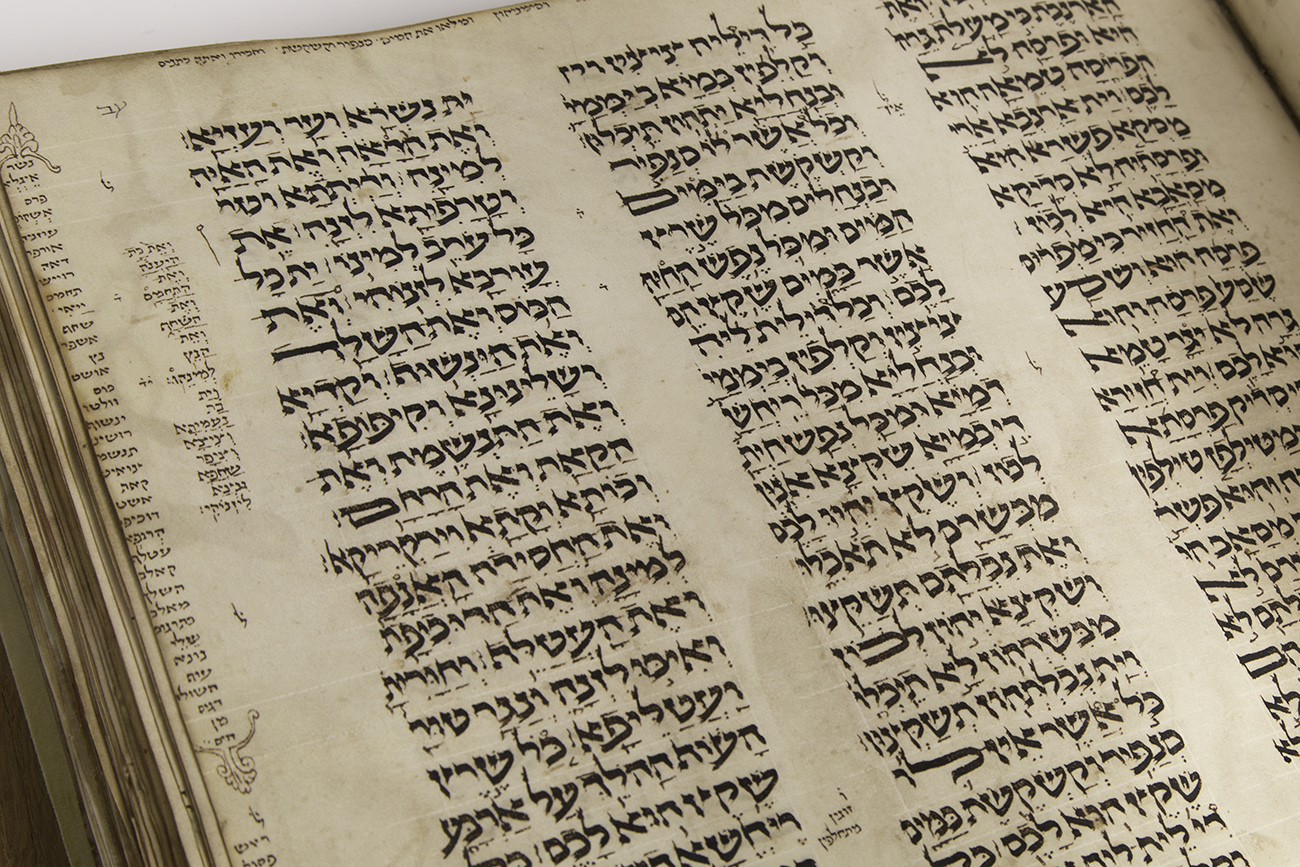
Solger MS of TgLam

TgLam 3:18, Solger MS

As I am working on my new book on Targum Ruth I am also editing my doctoral thesis to get it into eBook form (well, truth be told, an undergrad is doing the editing). One matter that I laid out in the thesis and my book that I think is still valuable is the need for us as scholars to be explicit in our methods. Or at least to be as conscious of them as we can be. In the following I lay out my argument for what I call “the Exegetical Method” for analyzing Targumic Literature. I was working on Targum Lamentations at the time so the examples all come from that text. For citations (there were far too many footnotes to sort out and, as I have suggested before, I hate endnotes) please see the PDF of my thesis available here.

The Exegetical Method

Although targumic literature has been studied extensively over the last several decades, there has yet to be a systematic presentation of a critical methodology for the reading and interpretation of targumic texts. There are critical studies of the targumim, but they have tended to focus upon textual and recensional issues and relied upon relatively self-evident methods of analysis. Several scholars have focused upon the literary and theological aspects of the targumim, but they tend to articulate the method with which they will approach the particular text at hand rather than argue for a more general method that would be usable in the study of other targumim. On the other hand, there is the invaluable work of Klein, who examines many different targumim in order to reveal patterns in the translational method of the targumist.

It would appear that the field of targumic studies is lacking what biblical studies has taken for granted for the last 100 years: an armory of articulated critical methodologies from which we might choose that which best applies to a given text and approach. In this section I will present a general critical methodology that can be applied to targumic texts in order to determine their exegetical, or theological, perspective. This proposed method for discerning the exegetical perspective of a targum, which I will refer to as the “Exegetical Method,” involves three main steps.  (more…)


One or Two Articles on Boaz?

I had originally planned two articles on the character of Boaz and subsequently presented two separate papers. The first was on the figure of Boaz strictly within the biblical book of Ruth. The other was on how the Targumist had transformed the figure of Boaz in Targum Ruth. This progression made sense, of course, because one must first deal with the actually biblical text before one can consider how the Targumist has changed or adapted it in the Targum.

At the IOTS conference where I presented the second paper I was encouraged to simply create one larger article that engaged with the entire topic, beginning with the biblical figure of Boaz and moving into the Targumic interpretation. This weekend we have had a wonderful exchange around the topic of Boaz and men in the book of Ruth. In particular Sue of Suzanne’s Bookshelf has had a number of helpful and provocative critiques of my suggestion. Benj and others have contributed as well.

All of this has me thinking that I cannot really flow the one article easily into the other. Certainly the article on TgRuth will take as its basis and allude to my reading of how the biblical book presents Boaz, but to spend 10+ pages wrestling with the biblical text and modern scholarship on this figure to then move into the Targumic (and, referencing more broadly, rabbinic) interpretation doesn’t seem to me like it would flow well. So I ask you, should I do two articles or would you prefer one?