Targuman Rotating Header Image

Anglican

The example of David, good or bad?

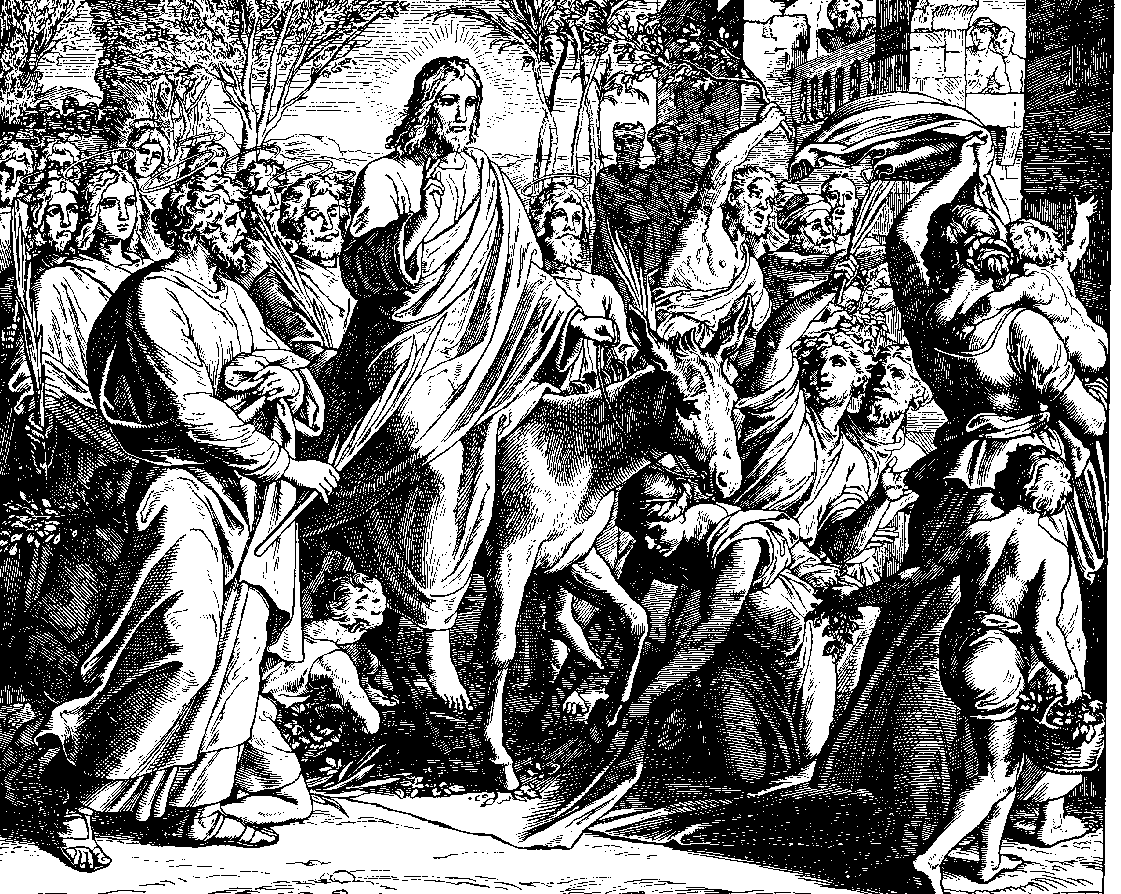
Last Sunday I was the guest preacher/celebrant at a nearby parish and had the chance the preach on David. As many of you know, he is one of my favorite biblical figures, but not always for the reasons people expect. The Revised Common Lectionary this summer has been following the story of David through Samuel so I took this opportunity to consider how it could be that this murdering, adulterer could be a man after God’s own heart.”

Proper 14
Year B
RCL

2 Samuel 18:5-9, 15, 31-33
Psalm 130
Ephesians 4:25-5:2
John 6:35, 41-51


No Buddhist Bishop for ECUSA

Apparently Kevin Thew Forrester, the Episcopal priest who is also an ordained Buddhist priest, will not receive enough votes to become the next bishop of Northern Michigan. (My previous post on this matter is here.)

Kevin Thew Forrester’s election reportedly fails

The Rev. Kevin Thew Forrester cannot receive enough votes from standing committees in the Episcopal Church to be consecrated as bishop of Northern Michigan according to a tally kept by an Arkansas reporter who has been in contact with all of the Church’s 110 dioceses as well as the Convocation in Europe.

The Diocese of Bethlehem’s standing committee voted not to consent to Thew Forrester’s election tonight, becoming the 56th diocese to withhold consent according to the reporting of Frank Lockwood of the Arkansas Democrat-Gazette, who also reports online at Bible Belt Blogger. If his count is correct, Thew Forrester can only be confirmed if some standing committee’s change their votes.

Read more here.


Latterday Latitudinarians Lumbering over the Limen

George F. Will has an excellent and fair summary of where the Episcopal church finds itself. You can find the article in the Washington Post: A Faith’s Dwindling Following. The summary is fairly straightforward:

As the church’s doctrines have become more elastic, the church has contracted. It celebrates an “inclusiveness” that includes fewer and fewer members.

He is, of course, not saying anything new or that we have not observed before. I have often marveled at how the so-called “progressives” in our church (I say “so-called” because such a term, like so many in politics, is used not to define oneself, but the other; the opposite of “progressive” is, of course, “regressive”) are so confounded as to why evangelical churches with a fairly straightforward message of repentance, acceptance of forgiveness, and Bible study have been growing so rapidly while our numbers dwindle. The answer is simple. Very few people want a religious community where “anything goes.”

People fundamentally understand that not everything can be equally right. We go to churches, synagogues, and mosques to hear guidance and direction. We know we aren’t perfect and recognize there must be a better way. The last thing we want to hear is “your OK just the way you are, don’t change a thing” because we know that we are not OK. A newer generation won’t get the reference, but we might say “I’m not OK and you’re not OK and that’s OK.” At the core of all the Bible and the Gospel particularly is the assertion that we and this creation were made for something much, much better than what we are now. We need clarity of message so that we can decide whether or not we agree with it. Say what you will about Willow Creek Bible Church, you know what they believe. You may not agree with them, which is fine, but you know what they believe. What does the Episcopal Church believe? Hmm. That’s a tough one….

In many ways I think that the Episcopal Church would be far, far better off if it simply decided to draw a clear line in the sand regarding the role and authority of Scripture. The church would probably lose members and it might gain them, but at least being decisive would allow those seeking a community of faith to know upon what (or whom) the Episcopal Church based their faith.  Be hot or be cold, but no one finds luke wark palatable.


Lambeth Conference Reflections

The document is now online. I have only skimmed portions, but I think this paragraph sums up a lot of where we are (and are not).

110. There is confusion about what “the issue” really means. There are three aspects that would help to clarify discussions:

* How the church evangelizes, disciples and provides pastoral care for homosexual people;
* How and on what basis the church admits people to Sacred Orders;
* How the church deals with the first two locally and globally.

The whole document can be found here and commentary is at the Episcopal Café.


Colbert Reports on Lambeth