A sermon for Transfiguration Sunday 2026, leading us into Lent. Preached at Good Shepherd Lutheran Church, Springfield, Ohio.
- Exodus 24:12-18
- 2 Peter 1:16-21
- Matthew 17:1-9
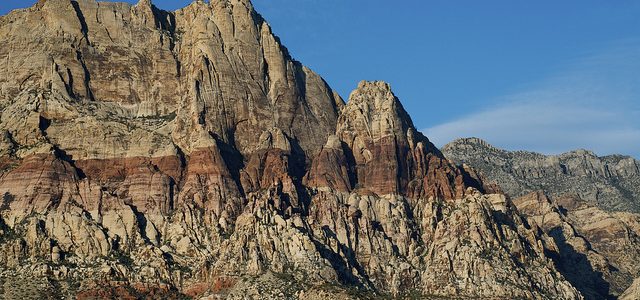
A lot happens on mountain tops in the Bible. We read time and again of figures who go, or often are sent, “up a high mountain.” It is on a mountain that Abraham was told to sacrifice his son Isaac. Taking nothing with him on the last leg of the journey but a knife, the flint for the fire, and the boy who carried the wood for the sacrifice on his back. Abraham told his servants, “the boy and I will go over there; we will worship, and then we will come back to you.” As they walked, Isaac asked his dad, “We have the wood and the fire, but what about the lamb?” Father Abraham answered, “God himself will provide the lamb for a burnt offering” (Gen. 22:8).
It was on Horeb, “the mountain of God,” that Moses beheld the bush that burned but was not consumed as God declared that he would use Moses to lead his people out of Egypt. God said, “Go to Egypt and Pharaoh and bring my people out of Egypt.” And when Moses asked for a sign, God said, “I will be with you; and this shall be the sign for you that it is I who sent you: when you have brought the people out of Egypt, you shall worship God on this mountain.” (Ex. 3)
Notice that the sign God promises Moses that something will happen is that after it has happened, they will worship God on this very same mountain. That is faith! I don’t know about you, I usually look for signs to come before the thing I am supposed to undertake; “what is the sign that I should do this” is the usual question not, “what is the sign that I did this.”
Moses did request other signs, and God gave them to him, including revealing that his name was the verb of existence (“to be”), saying, “I AM who I AM.” And so, God confounded Pharaoh and all his army and Israel made it through the wilderness back the mountain of God. Then God called him back up to mountain, to receive the tablets of the Law. (Ex. 24:12) “The LORD said to Moses, ‘Come up to me on the mountain, and wait there; and I will give you the tablets of stone, with the law and the commandment, which I have written for their instruction.’”
So, Moses went up the mountain to meet with God. And he waited. And he waited. For seven days God made him went. Then, after he met God in the cloud on the heights of the mountain, Moses hung out some more. All in all, Moses was there for forty days and forty nights. Consider that when we discuss our own efforts to set aside time to pray and meet with God. Do we have patience to wait even thirty minutes let alone 6 days? (I rarely do.) If I asked us to sit in silence right now, after 30 seconds perhaps, certainly no more than a minute, we would all start to get antsy, eager to get on with the service. Imagine, on a mountain, waiting, day after day, not knowing exactly what was going to happen, but simply obeying because God said, “Go up, wait, and I will be with you…eventually.”
When God begins to speak to us and works in our lives it takes time…usually a lot of time.
It is worth remembering as well what was going on at the foot of the mountain while Moses was up on the heights, waiting to receive the Law from God, that Law which calls us to be a holy people. The rest of the people were just sitting around waiting…waiting. As the old folk saying goes, “idle hands make the Devil’s work” and those idle hands made an idol of a golden calf.
Even when we are not on the mountain top we need to keep our focus on God because we are a people easily distracted by shiny things.
So it is at the high places, on the mountain tops, that Israel also sinned against God, committing idolatry, worshiping other gods. After they settled in the Land of Canaan, many simply took over the Canaanite places of worship on the hilltops and began offering their own sacrifices to the local deities. God sent the prophet Elijah to fight against this idolatry, to confront King Ahab and Queen Jezebel with their blasphemy, and to destroy the 450 prophets of Baal. As he fled for his life, Elijah was so weary he prayed that God would take his life (1 Kings 19:4). But God sent him on a journey of “forty days and forty nights to Horeb the mount of God.”
Where centuries before Moses had stood and received the Law from the Lord, God told Elijah to “Go out and stand on the mountain before the LORD, for the LORD is about to pass by” (1 Kings 19:11). Perhaps you recall the story. Elijah stands there, waiting for God and a mighty wind blows, strong enough to break the mountain. But “the LORD was not in the wind; and after the wind an earthquake, but the LORD was not in the earthquake; and after the earthquake a fire, but the LORD was not in the fire; and after the fire a sound of sheer silence.” God was in the silence. When the Lord spoke to Elijah, he sent him back to the world that wanted to destroy him so that he could continue his ministry. Meeting God will challenge and change your life.
And it is while Jesus was in the wilderness for forty days and forty nights that the Tempter took him to “a very high mountain” (Matt. 4:8-10). He “showed [Jesus] all the kingdoms of the world and their splendor; and he said to him, ‘All these I will give you, if you will fall down and worship me.’ Jesus said to him, ‘Away with you, Satan! for it is written, “Worship the Lord your God, and serve only him.”’”[1]
On the high places we can meet God or be tempted with the allusion that we are gods.
Mountains are remote, often beautiful and dangerous; that is certainly one reason why so many people feel closer to God in such places. The edifices of humanity fall away, we are exposed and vulnerable, distractions are removed and we are left alone with God. Jesus practiced this often, going aside from the crowds even and especially in the busiest times of his ministry, to pray alone or with just a few of his friends. It is an example we should follow as well, even if we cannot physically get up a mountain. This is the purpose of Lent, the time in our liturgical year when we turn aside from our usual routines, habits, and pleasures and take up different disciplines, pray in new ways, and meet God anew.
Whether we journey to literal or metaphorical high places, when we set our heart to the task of turning aside from this world, even if only for a time, to be with God it will be scary, frightening, and life-changing. Abraham took Isaac up to the Holy Place to offer him as a sacrifice to God, trusting that “God himself will provide the lamb for a burnt offering.” From the cloud on Mount Sinai, God met Moses and gave us his Law, instructions for how we are to live holy lives. As we have been discussing, God (and Paul) call us to be a holy people, for the LORD our God is holy. That is no easy task. Elijah, well, Elijah went up the mountain and simply wanted to die. He was done, he had served God and now he wanted it to be finished. But God sent him back out to continue his ministry and God’s will in the world.
When we are willing to submit ourselves fully to God and follow his commands, we will almost always be uncomfortable and will certainly be challenged to change our lives in fundamental ways.
We may find temptation on the mountain as well, as did those Israelites who went to the high places to worship Asherah and Baal. We may find that the highest places we ascend are not literal, but metaphorical, perhaps in our careers. Standing on the top of our industry and looking out, proud of all we have accomplished, temptation is strong. Remember, it was in just such a situation that Jesus turned to Scripture and said, “Away with you, Satan! for it is written, ‘Worship the Lord your God, and serve only him’” (Matt. 4:10).
Here, towards the end of Jesus’ ministry he ascends the mountain again. He goes to pray and meet with God. Peter, James, and John are there to see the Law and the Prophets fulfilled, coming together and united in the Messiah, as Moses and Elijah appear with Jesus. Peter, as is his wont, is quick to speak rather than listen, but the voice of God cuts him off, “This is my Son, the Beloved; with him I am well pleased; listen to him!”
Now we are entering into Lent, a time that echoes Jesus’ own experience in the wilderness for forty days and forty nights. In that time he was tempted and struggled, he fasted and prayed. Lent should be a time of reflection, repentance, and restoration. We should not shun the wasteland experience, but neither should we enter into it lightly. This week, prepare yourself to wait for and to meet God. And be encouraged: doubt leads to faith, temptation to discipline.
This Lent, ascend the mountain, go into the desert, and set aside time and space to listen to God. He will meet you there.
Amen. ✠
[1] Compare that with Psalm. 2:7-9 “I will tell of the decree of the LORD: He said to me, ‘You are my son; today I have begotten you. Ask of me, and I will make the nations your heritage, and the ends of the earth your possession. You shall break them with a rod of iron, and dash them in pieces like a potter’s vessel.’”